
Eatery Insights
Why menu calorie counts don't change how I order
Big chains have posted calories since 2018. Here's what the research says, and why seeing protein next to the number is what actually changes my order.
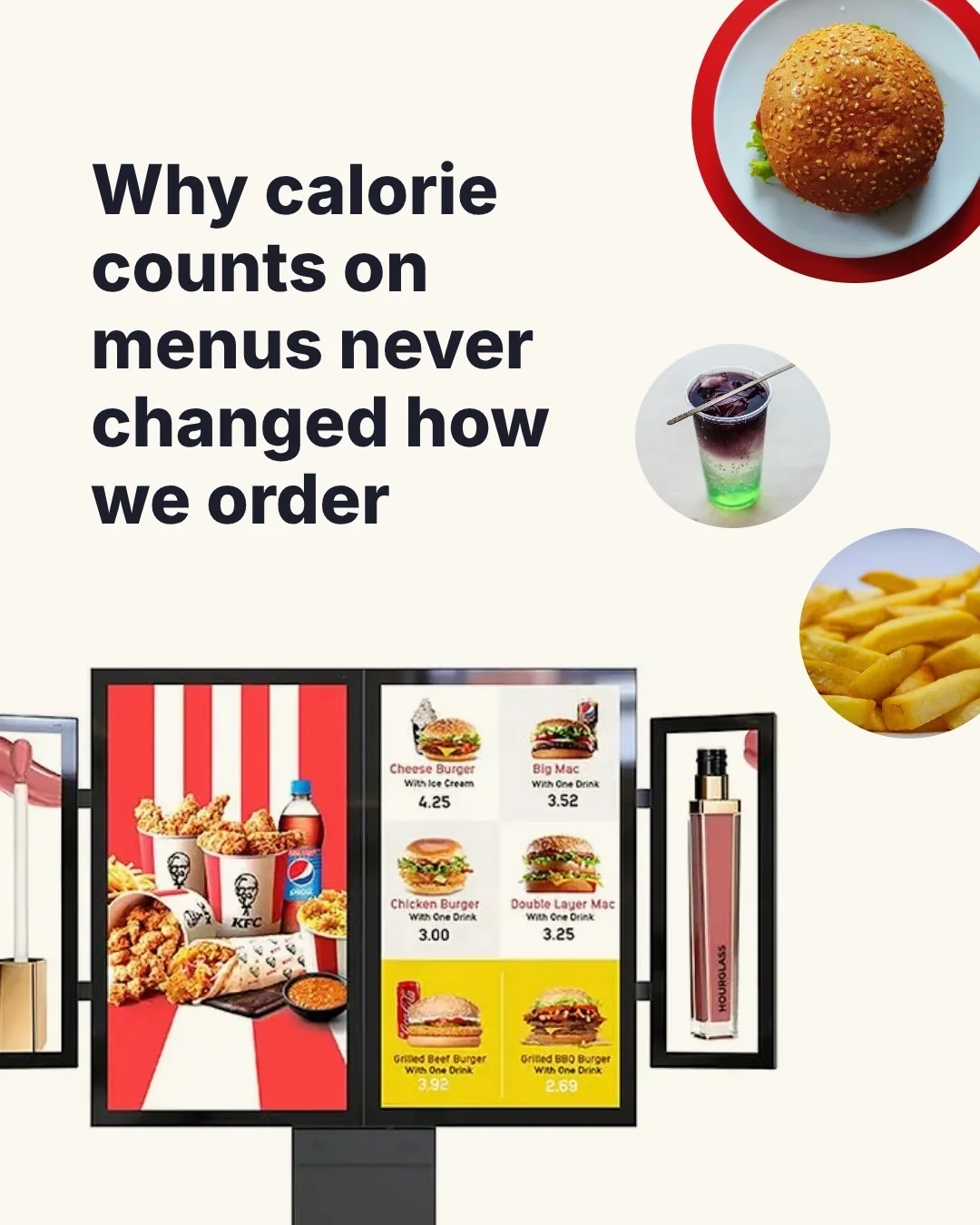
From a fancy date night meal at North Italia to an early morning breakfast at Chick-fil-A, when I see calorie counts on a menu, I don’t really change how I order. Even with some context about the meal, without easily accessible nutritional information like protein, I don’t find myself trying to eat healthy.
Although some restaurant menus come with caloric information tagged onto the menu item you are ordering, does that extra information actually change your decision making? Through personal experiences and anecdotes from friends, I often hear people tell me that they count calories across the day and do the mental math to know what their daily total is. Big chains have to post calories, but most local spots don’t, so going out to eat and doing the mental math isn’t perfect.
What the research says about menu calorie labels
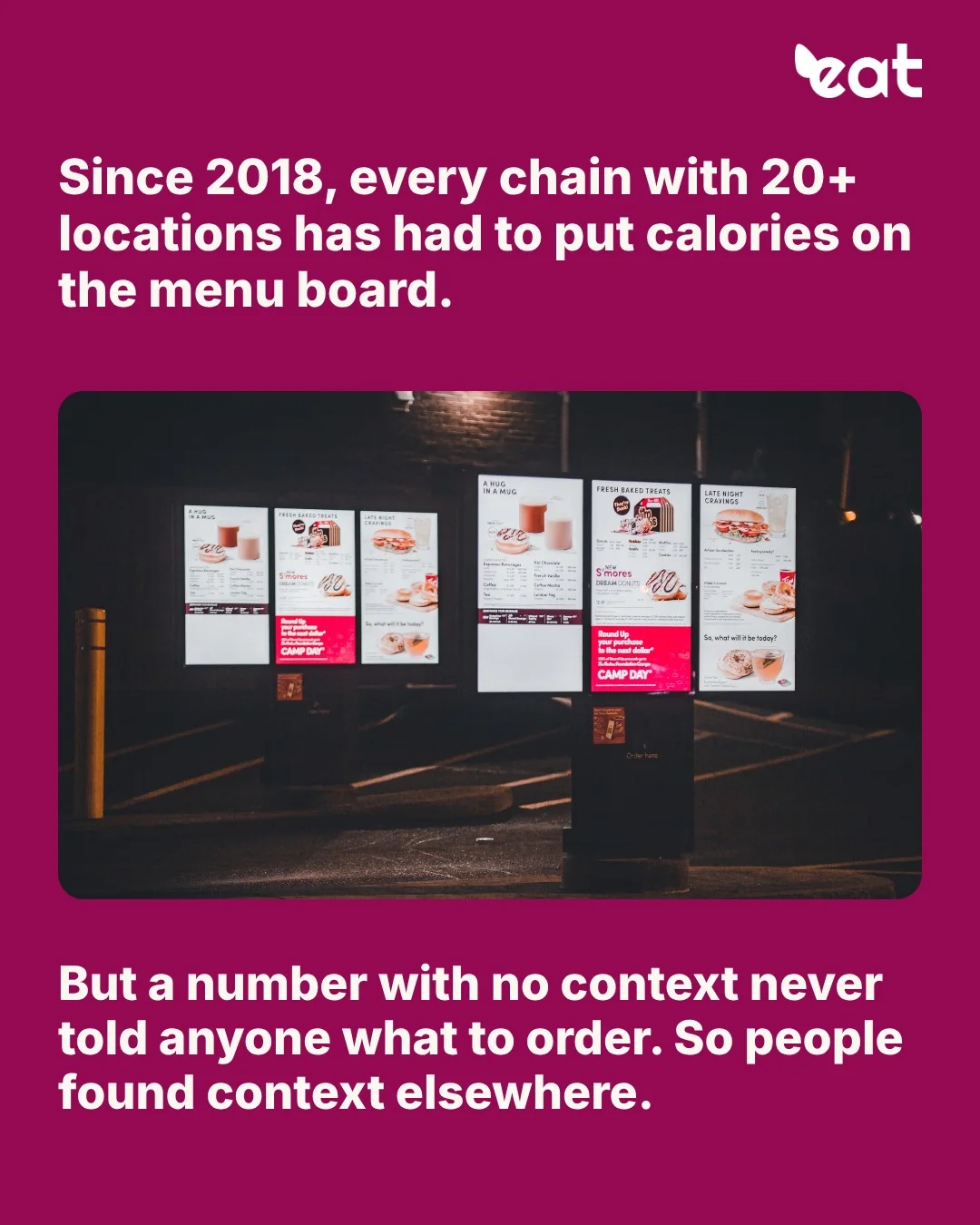
- Calorie labels are now required at large US chains (FDA, 2018). FDA's menu labeling rule applies to restaurants and similar retail food establishments that are part of a chain of 20 or more locations, doing business under the same name and offering substantially the same menu items. Covered establishments must list calories for standard menu items on menus and menu boards, with other nutrients — including protein — available in writing on request. The compliance date was May 7, 2018. Source: fda.gov
- In New York City, people noticed the labels, but receipts didn't change (Elbel et al., Health Affairs, 2009). Researchers collected receipts and surveys from 1,156 adults at fast-food restaurants in low-income, minority New York City communities, with Newark, NJ (no labeling) as a comparison. After NYC's 2008 mandate, 54% of NYC respondents noticed calorie information, and 27.7% of those who saw it said it influenced their choices (about 88% of that group said they bought fewer calories). But the authors 'did not detect a change in calories purchased': the mean was 825 calories before labeling and 846 after, with no statistically significant difference. Source: healthaffairs.org
- Nationwide-style labeling at a big fast-food franchise: a small drop that faded (Petimar et al., BMJ, 2019). Across 104 restaurants in Louisiana, Texas and Mississippi (about 49 million transactions), adding calories to in-store and drive-thru menus in April 2017 was followed by a decrease of 60 calories per transaction (about 4%), then an increasing trend of 0.71 calories per transaction per week. The authors conclude: 'A small decrease in mean calories purchased per transaction was observed … This reduction diminished over one year of follow-up.' The drop was stronger for sides than for entrees or sugar-sweetened beverages. Source: bmj.com
- Pooled trials show a modest effect, with low-quality evidence (Cochrane review, Crockett et al., 2018). A meta-analysis of three randomized trials of calorie labeling on restaurant menus found a reduction of 47 kcal in energy purchased (MD −46.72 kcal, 95% CI −78.35 to −15.10; N = 1,877) — about 7.8% of an assumed 600 kcal meal. The reviewers rated the evidence quality as low, 'so our confidence in the effect estimate is limited.' In laboratory studies, labels on menus 'did not conclusively demonstrate a reduction in energy consumed' (MD −50 kcal, 95% CI −104.41 to 3.88). Source: cochranelibrary.com
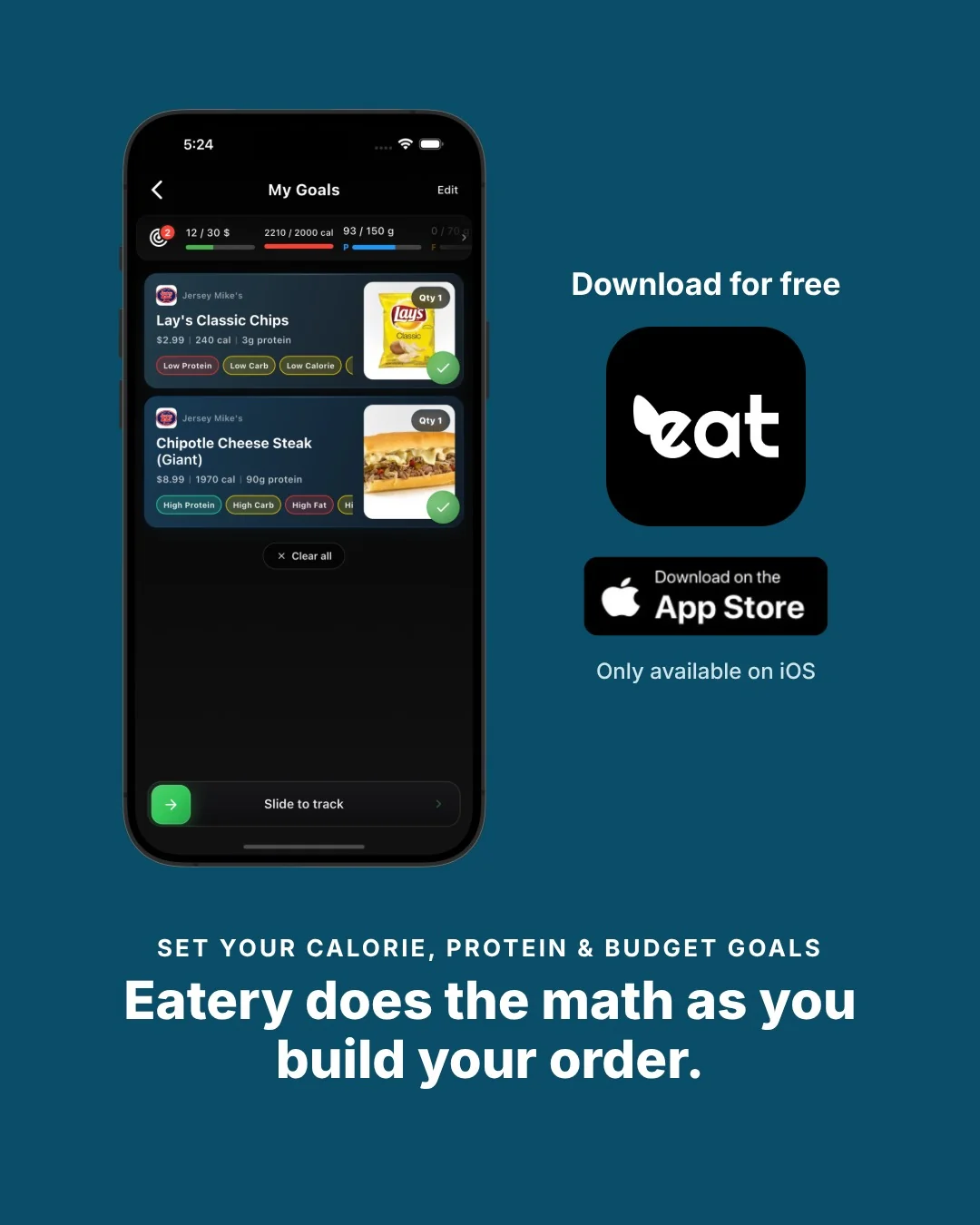
From EatAI nutrition estimates to fully verified nutrition information from chains, the Eatery app makes it easier to do the math behind your order.
Why calories alone don't give you enough context
Even when a calorie count exists, you don’t really know what you’re getting. Two entrees can be hundreds of calories apart and still deliver about the same protein. Here's what that looks like on one real menu.
| Olive Garden entree | Calories | Protein (g) | Calories per gram of protein |
|---|---|---|---|
| Chicken Parmigiana (dinner) | 1,020 | 64 | 15.9 |
| Grilled Chicken Margherita | 650 | 65 | 10.0 |
| Herb-Grilled Salmon | 610 | 45 | 13.6 |
| Tortelloni Alfredo | 1,980 | 112 | 17.7 |
Source: Olive Garden official nutrition information (PDF, rev. US_083126, Aug 2026). Calories per gram of protein = calories ÷ protein grams (lower = more protein for the calories).
As you can see with the differences between the Grilled Chicken Margherita and Chicken Parmigiana which have about the same protein (65 g vs 64 g), the Margherita has 370 fewer calories. The Tortelloni Alfredo has the most protein on the list (112 g) and also the most calories (1,980). A calorie count by itself can't tell you any of that, when you add protein, now you can quickly understand where the calories come from within the meal itself.
See what I actually order at Olive Garden.
What I look at instead
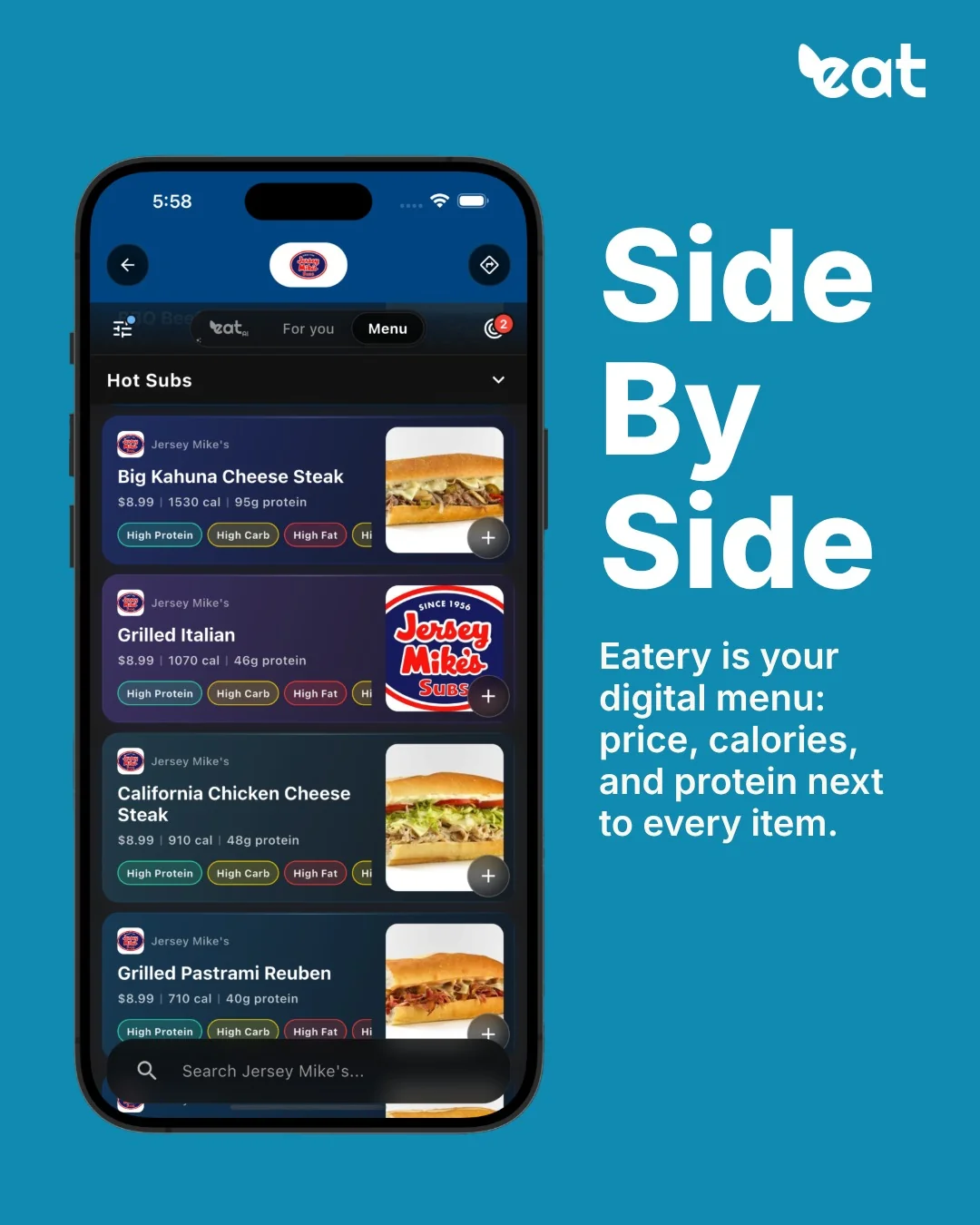
That’s where using the Eatery app provides you a digital menu with nutritional information and context for each menu. While Eatery has nutrition info, each menu item is only shown with simple price, calories, and protein to help you quickly do the mental math on the golden ratio (10 calories for every gram of protein), a simple calculation everyone can do in their head, without overwhelming you with too much information. While calories alone lack the context, I believe the simple addition of protein can help you make smarter decisions.
More on finding healthy restaurant meals without a subscription.
Frequently Asked Questions
Do calorie labels on menus work?
The evidence shows small effects at best. A Cochrane review of three restaurant trials found menu calorie labels reduced energy purchased by about 47 kcal per meal, but rated the evidence low quality. In a large US fast-food franchise, labeling was followed by a 60-calorie (about 4%) drop per transaction that diminished over a year.
Did New York City's menu calorie labeling change what people ordered?
In a 2009 Health Affairs study of low-income NYC neighborhoods, 27.7% of people who saw the labels said they influenced their choices, but receipts showed no detectable change: 825 calories before labeling vs. 846 after.
Why don't calorie counts on menus work better?
A calorie number alone doesn't tell you what you get for those calories — such as protein — or what the meal costs. In the Petimar study, the drop was mostly in sides, not entrees, and it faded over a year.
When did calorie labels become required on US menus?
Under FDA's menu labeling rule, chains with 20 or more locations operating under the same name and offering substantially the same menu items had to comply by May 7, 2018. Protein and other nutrients must be available in writing on request.
What should I look at besides calories when eating out?
Protein relative to calories and price. A simple rule of thumb is about 10 calories for every gram of protein. For example, at Olive Garden the Grilled Chicken Margherita (650 cal, 65 g protein) hits exactly that ratio, while the Chicken Parmigiana dinner has about the same protein (64 g) for 1,020 calories.